Saturday, September 6, 2008

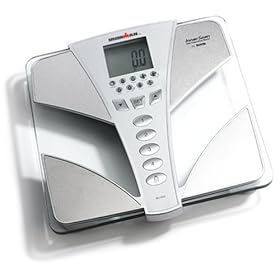
Tanita BC554 Ironman Glass InnerScan Body Composition Monitor Elite Series


The Tanita BC554 Ironman Glass InnerScan Body Composition Monitor Elite Series is one of the most comprehensive body monitors on the market today that's designed for home use. Using advanced Bioelectric Impedance Analysis (BIA) technology that was previously available only to medical professionals, health clubs and professional athletes, this monitor analyzes a full range of body measurements, including weight, body fat percentage, body water percentage, metabolic age, bone mass, and physique rating. It's a mouthful of measurements, but what it means is that with the Tanita BC554, you now have the unprecedented ability to monitor your body and the effects of your diet and fitness routines, comfortably and affordably in the convenience of your own home.

With the Tanita BC554, up to four users can benefit. Simply supply your gender, age, height and weight in the memory, step on the scale, and the monitor does the rest. The results are analyzed according to each user's information, and the result -- displayed in the monitor's 2.25-inch LCD screen -- is the one of the most comprehensive at-home readings you can get.

This monitor, which is about the same size as a typical bathroom scale, is ideal for anyone who is serious about monitoring their health and fitness. Knowing your body fat percentage -- the amount of body fat as a proportion of your body weight -- is essential if you want to create a diet and exercise plan that helps reduce the risk of certain conditions such as high blood pressure, heart disease, diabetes and cancer. Body water percentage is the total amount of fluid in your body expressed as a percentage of your total weight. Maintaining a healthy body water percentage ensures that your body functions efficiently. The metabolic age level is related to your body's metabolic rate and helps you maintain the daily minimum level of energy or calories your body requires when resting or sleeping to function effectively. Even though your total body weight might not change drastically over time, your muscle mass and body fat levels may be changing. Keeping tabs on them can help you stay at a lower risk of certain diseases. As you become more active and reduce the amount of body fat, your physique rating will also change accordingly. The physique rating helps you maintain a diet and fitness program to achieve your desired level. And knowing your levels of visceral fat -- the fat in the abdominal cavity and surrounding the vital organs -- can help you keep heart disease and high blood pressure at bay, and may delay the onset of type two diabetes. In short, this monitor gives you essential information and greater control as you work to stay healthy and live a more active, vital life.

A Good Source of Inspration

As long as you realize that this is not a precision measuring instrument, you'll be happy with this scale. What it is good for is monitoring trends in your weight and body fat.

There are about 10 functions on this scale. Two, maybe three are useful. Your weight. That's a good one to have. Body fat %. This number will fluctuate considerably depending on many factors. Perspiration is one. So you have to get into the habit of taking readings in consistent environments, like the same time of day, x hours after eating or exercising, etc. Again, you're not getting an exact number, you're tracking trends. There are numbers for bone mass, body moisture %, calories required (BMI I think), visceral fat (or something like that. The fat around your organs), age (or what age your body's shape is in) and a physique index. My physique is up to 2 (I started at 1 having done little exercising lately). My age reading was 50 (being 54 I thought I was doing good till I read that the scale doesn't go over 50).

So I check my weight, body fat, age, and physique rating, and pretty much ignore the others. Although some of the other readings can indicate that your environment is uniform. So I don't really need to know that I have 7lbs of bones, but that if that number changes, maybe some other factor has changed, too.

I'm pleased with this scale. I've had it about 4 months now, and all is well. I just need to get that physique rating up, and body fat % down. The scale won't make you exercise, but it will make you glad you did.

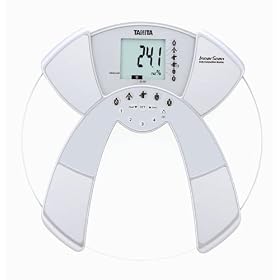
Tanita BC533 Glass Innerscan Body Composition Monitor


Customer Reviews

Tanita BC533 measures weight, body fat and so much more!
For many years I used a digital scale that gave me a different readout each time I used it. I like to weigh daily but found that stepping up and down on the scale several times to get an average weight was frustrating. I thought that was the norm with scales until I started reading scale reviews and discovered that many people found the Tanita line to be accurate. If they weighed several times in a row they got a consistent readout. They did not have to take an average as I did with my Health-O-Meter. As a treat to myself, for losing 10 pounds, I decided to purchase a Tanita and after doing some research opted for the Tanita BC533.

The Tanita BC533 is a state of the art scale that measures your weight (to two-tenths of a pound), body fat, visceral fat, bone mass, metabolic age and muscle mass. It is very simple to operate. You input your height, weight, average physical activity level and age. The Tanita will remember this information for up to four people so you only have to do it once, unless your information changes. (There is also a guest mode if a visitor wants to try it.) Once you have programmed the scale you toe tap your number, step on the platform and you will see your weight and body fat measurement. (Note - If you wear socks the body fat measurement will not work.) Then you can toe tap other buttons of your choice. A little figure gives you a visual cue as to what the buttons are. For example for muscle mass the figure is holding weights. For bone mass there is a tiny skeleton inside the figure. You decide which body composition features you wish to check. You may for example want to check your bone mass once a month, or then again you may want to check it weekly. It's up to you. It's as simple as pressing the corresponding button, and takes only seconds.

Tanita has also introduced the Ironman Innerscan line. I was not sure of the difference so I called customer service. Amber went out of her way to explain the benefits of the Innerscan line, and the basic difference between the regular Innerscan and the Ironman. The Ironman gives you your BMI or basal metabolic caloric rate. This is the basic number of calories your body needs. The regular Innerscan (like the BC533) gives you your DCI instead. The DCI is a calculation where the BMI is multiplied by your activity level to tell you the number of calories you are taking in to maintain the weight you are. When you see this information you can then adjust up or down to help you gain or lose weight or stay the same. Nifty!

Tanita includes a guide with the scale that explains exactly how the scale works. The scale is a bioimpedence device. A low level current (which you don't feel) passes through your body and the impedance or resistance level is used to calculate body composition. The booklet explains healthy ranges of body fat and also explains what body water percentage, visceral fat, etc. mean.

The scale is also very attractive. Sleek styling and easy to use. Those with poor vision may find the buttons a little hard to see. But the visual clues will help. Despite the glass surface the scale stays very clean.

The BC533 is an outstanding tool to help you accomplish your health goals!

Very useful precision health monitor with stylish design.,
Being an avid swimmer, cyclist, runner, and outdoors fanatic, I decided to buy the Tanita BC533 to monitor my fitness beyond just body weight. I researched around the web and found mostly positive reviews on Tanita scales. I've also considered the Tanita Iron Man BC554 with similar user modes and more recall capabilites but the BC533 just looks more stylish: shaped like a chromosome. Amazon offered a good price with free shipping and a $30 gift certificate for Tanita Body Composition Monitors. Subtract another $30 from that if one applies for the Amazon visa: an Win-Win transaction!

To get accurate measurements, one would need to obtain readings under consistent conditions, i.e., approx. same time of the day, no meals within 3 hrs., similar hydration conditions, etc. I found most of the functions to be helpful: Weight, %Body fat, %Total body water (makes sure one is not dehydrated), Visceral fat % (getting rid of fat around the waist), Muscle mass & Physique rating (making sure one is not losing muscle mass while reducing fat), Bone mass (making sure one is not calcium/mineral deficient and losing bone mass), DCI (Daily Caloric Intake=amount of calories one need to intake the next 24hrs. to maintain current weight)& Metabolic age (calculates one's Basal Metabolic Rate and age associated with that age). The BC533 comes with batteries, an easy to understand manual, and a body composition measurements guide. Holy moley, my metabolic age is 16!

Updated 12-31-06: My Tanita BC533 is still working well. Periodic cleaning of the sensor surfaces has kept the weight measurements fairly consistent. The % body fat and other measurements tend to vary since users can't duplicate exact measuring conditions EVERY time. For <$50, don't expect "sports clinic" accuracy levels of physiological measurements. I exercise regularly and eat healthy foods (as much as I want) so preventing weight (fat) gain and maintaing muscle mass is not a problem; and this scale has been helpful.

Friday, September 5, 2008

You: On A Diet: The Owner's Manual for Waist Management (Hardcover)

You: On A Diet: The Owner's Manual for Waist Management (Hardcover)

Editorial Reviews
For the first time in our history, scientists are uncovering astounding medical evidence about dieting--and why so many of us struggle with our weight and the size of our waists. Now researchers are unraveling biological secrets about such things as why you crave chocolate or gorge at buffets or store so much fat.

Michael Roizen and Mehmet Oz, America's most trusted doctor team and authors of the bestselling YOU series, are now translating this cutting-edge information to help you shave inches off your waist. They're going to do it by giving you the best weapon against fat: knowledge. By understanding how your body's fat-storing and fat-burning systems work, you're going to learn how to crack the code on true and lifelong waist management.

Roizen and Oz will invigorate you with equal parts information, motivation, and change-your-life action to show you how your brain, stomach, hormones, muscles, heart, genetics, and stress levels all interact biologically to determine if your body is the size of a baseball bat or of a baseball stadium. In YOU: On a Diet, Roizen and Oz will redefine what a healthy figure is, then take you through an under-the skin tour of the organs that influence your body's size and its health. You'll even be convinced that the key number to fixate on is not your weight, but your waist size, which best indicates the medical risks of storing too much fat.

Because the world has almost as many diet plans as it has e-mail spammers, you'd think that just about all of us would know everything there is to know about dieting, about fat, and about the reasons why our bellies have grown so large. YOU: On a Diet is much more than a diet plan or a series of instructions and guidelines or a faddish berries-only eating plan. It's a complete manual for waist management. It will show you how to achieve and maintain an ideal and healthy body size by providing a lexicon according to which any weight-loss system can be explained. YOU: On a Diet will serve as the operating system that facilitates future evolution in our dieting software. After you learn about the biology of your body and the biology and psychology of fat, you'll be given the YOU Diet and YOU Workout. Both are easy to learn, follow, and maintain. Following a two-week rebooting program will help you lose up to two inches from your waist right from the start.

With Roizen and Oz's signature accessibility, wit, and humor, YOU: On a Diet--The Owner's Manual for Waist Management will revolutionize the way you think about yourself and the food you consume, so that you'll diet smart, not hard. Welcome to your body on a diet.


Customer Reviews
Loading a book with humorous caricatures, myths, and factoids is a risky undertaking, when readers expect doctors to remain "formal". But, the authors have opted to present hard science in simple artistic format and succeeded in rendering it palatable, at least for the segment of readers interested in the mechanics of disease. The gamble with caricatures added a legendary aura to the book that will endure for future generations.

The main contribution in the book, beside its educational style, is emphasizing the "waist size" as a reliable index for healthy living. The authors advanced their argument through physiological reasoning. They focused on the omental and skin fats and intestinal infection and inflammation in relation to waist size. Thus, the smaller is the waist size, the lesser the inflammation and the depot of fat that hinders health.

The book falls into an introduction, 12 chapters, and three appendices that could be summarized as follows.

Introduction: "You: On a Diet. Work Smarter, Not Harder" introduces the reader to the main idea of the book. That is management of waist size through understanding the biology of eating. It tests the reader's common knowledge through a multiple choice test that targets the various aspects of the history and science of eating

Chapter 1:" The Ideal Body: What Your body Is supposed to Look Like" discusses the interplay of genetics and environment in shaping our physique.

Chapter 2: "Can't Get No satisfaction: the Science of Appetite" describes the rule of the central nervous system in controlling satiety through hormonal feedback from the stomach, intestine, and fat. It simplifies matters through two hormones: Leptin for satisfaction and Ghrelin for hunger.

Chapter 3: "Eater's Digest: How Food travels through Your Body" describes, in an educational style, the journey of food from mouth, tongue, stomach, intestine, colon, to liver, heart, muscles. Its humorous caricatures make it invaluable and entertaining.

Chapter 4: "Gut Check: The Dangerous Battles of Inflammation in Your Belly" describes the first battle of digestion between the body and food intake within the intestine. The outcome of digestion affects the liver, skin, and general health. Its main hostile participants are inflammation and infection. Omental, skin, and liver fat replete from the ingested food. It considers the intestine as the second brain by virtue of its millions of neurons and 95% of whole body serotonin.

Chapter 5: "Taking a fat Chance: How Fat Ruins Your Health" dwells on the omentum fat, described in chapter 4, and extends its effects to arterial narrowing and mechanical hindrance of breathing and mobility. Arterial narrowing deprives the whole body of its health causing cancer, high blood pressure, and diabetes. Omental fat is claimed to be more ominous than subcutaneous fat because the omentum lies on the solid vital organs while the subcutaneous fat is peripheral and remote.

Chapter 6: "Metabolic Motors: Your Body's Hormonal fat Burners" describes how metabolism is managed by hormonal signals from the adrenals, thyroids, and gonads.

Chapter 7: "Make the Move: How You Can Burn Fat Faster" discusses the effect of exercise, weight lifting (strength) and aerobics (stamina) on developing the energy management system by: increasing metabolism, burn energy, release endorphins (pleasure stimulants), and unclog blood vessels.

Chapter 8: "The Chemistry of Emotions: The Connection between Feelings and Food" discusses the relationship between behavior and neurotransmitters: norepinephrine, serotonin, dopamine, gamma aminobutyric acid, and nitric oxide. It thus relates eating to emotions such as anger, depression, anxiety, stress, jealousy, and loneliness.

Chapter 9: "Shame on Who? The Psychology of failed Diet" deals with the thought process of dieting versus the action process. It describes three areas of personality tests: eating pattern, exercise pattern, and coping pattern.

Chapter 10: "Make a You-Turn" describes strategies for accomplishing healthy body through eating, exercising, and coping with failure and recovery. It makes the waist size its critical index for success. Here where academic reasoning addresses the universal suffering from distended bellies in contemporary subjects.

Chapter 11: "The You activity Plan: Physical Strategies for Waist Management" is where the authors default. They suggest three-20-minute sessions per week of strengthening and stretching exercises. Those range from shoulder rolling, crossing, clapping, forward bend, push up, yoga poses, crunches, to dumbbell squats, lunges, and rowing. Here, the reader senses the detachment of academics from real advancement in workout experience.

Chapter 12: "The You Diet; The Waist-Management Eating Plan" recommends three meals plus snacks daily and dessert every other day. It prohibits sugars, simple carbohydrates, fructose, trans fat, saturated fat, and flour. It also has extensive menu and advices on how to choose among fast food if you have to. The forty pages of menu is a total waste, as people do not trust medical books in preparing their meals (personal opinion).

The three appendices deal with drugs, plastic surgery, and digestive surgery for overweight people.

The major drawback in the book is the exercise recommendation and meals menu. Those show the aloofness of the authors from modern America. The web is rich in better ideas on exercise and nutrition that work and get results. The book should have limited its scope to what the authors know best: applied physiology.

Mohamed F. El-Hewie
Author of
Essentials of Weightlifting and Strength Training

Saturday, August 23, 2008

What the Bible Says about Healthy Living: 3 Principles That Will Change Your Diet and Improve Your Health (Paperback)


What the Bible Says about Healthy Living: 3 Principles That Will Change Your Diet and Improve Your Health (Paperback)

Editorial Reviews

Product Description
Three Biblical Principles that Will Change Your Diet and Improve Your Health. In a world infatuated with junk food and fad diets, why have we overlooked the simple instructions provided in the Bible that have guided and people for thousands of years toward better health? You don't have to be Jewish or a Christian to discover wisdom for healthier living in this doctor's scripturally-based book on eating and feeling better, and living longer. These simple principles will help you find energy, freedom from illness, and more vibrant health!

From the Back Cover
In a world infatuated with junk food and fad diets, why have we overlooked the simple instructions provided in the Bible that have guided and people for thousands of years toward better health? You don't have to be Jewish or a Christian to discover wisdom for healthier living in this doctor's scripturally-based book on eating and feeling better, and living longer. These simple principles will help you find energy, freedom from illness, and more vibrant health! --This text refers to the Hardcover edition.

About the Author
DR. REX RUSSELL is a board-certified invasive radiologist. A former three-year letterman in football at Oklahoma State, Dr. Russell now spends his time in the areas of vascular radiology. He attended medical school at Baylor University in Houston, TX, and completed his residency at the Mayo Clinic in Rochester, MN. He has practiced at two of the nation's outstanding hospitals, St. Luke's Hospital in Houston, and the Regional Medical Center in Fort Smith, Arkansas where he and his wife, Judy, make their home.

Most Helpful Customer Reviews
What the Bible Says About Healthy Living, March 8, 2007
By M. CLAGUE (Midwest)

This review is from: What the Bible Says About Healthy Living (Hardcover)
This book is one of the best books I have purchased concerning diet and healthy living. I was expecting a book that I most likely would have to sift thru to get a few important facts from. Instead, I discovered a very well written and documented book full of useful facts. The author has medical back ground and references information from medical studies and science. Love this book and hope many more read it. I have always believed that eating whole foods was best for me. Now I have more information too support my beliefs.

Staying Healthy With Nutrition, 21st Century Edition: The Complete Guide to Diet & Nutritional Medicine (Paperback)

Staying Healthy With Nutrition, 21st Century Edition: The Complete Guide to Diet & Nutritional Medicine (Paperback)

Editorial Reviews
From Library Journal
Designed as an introductory textbook to teach the basic principles of nutrition and their applications, this hefty volume brings together a wealth of information for the serious reader. Part 1 analyzes the building blocks of nutrition; Part 2 evaluates foods and diets; Part 3 discusses building a healthy diet; and Part 4 explains nutritional applications. But this book also examines topics not usually found in textbooks--herbal supplements, homeopathic medicines, environmental aspects of nutrition, and detoxification and healing programs, to name just a few. Although this exhaustive study is accurate and up to date, it's formidable length (over 1000 pages!) will greatly limit its appeal. Most readers concerned about healthy eating will prefer Jane Brody's Nutrition Book ( LJ 5/1/81) and/or Jean Carper's Total Nutrition Guide ( LJ 3/15/87).
- Linda Chopra, Cleveland Heights-University Heights P.L., Ohio
Copyright 1992 Reed Business Information, Inc. --This text refers to an out of print or unavailable edition of this title.

Book Description
A thorough and intensive discussion of nutritional medicine, STAYING HEALTHY WITH NUTRITION compiles decades of practical experience and scientific research into one encyclopedic volume. In this revised and updated twenty-first century edition, Dr. Elson Haas and Dr. Buck Levin present the most current health and nutrition information available. STAYING HEALTHY WITH NUTRITION features newly expanded chapters on special supplements, lifestyle programs, and groundbreaking medical treatment programs for conditions including fatigue, viral illnesses, and weight management. This comprehensive guide to good health is jam-packed with facts presented in a friendly and engaging tone. Easy to read and accessible for experts and novices alike, STAYING HEALTHY WITH NUTRITION is the ultimate handbook to maximum health, longevity, and general well-being.

Most Helpful Customer Reviews

By David Bennett (Ohio, United States)

This review is from: Staying Healthy With Nutrition: The Complete Guide to Diet and Nutritional Medicine (Paperback)
Dr. Haas has put together one of the most complete nutrition books that can be enjoyed by the average reader. From what I have read, he makes no outrageous claims, though he does believe nutrition can offer health benefits (which would distinguish this book from a standard nutrition textbook). While the price may seem a little steep, there are 1140 pages that contain a wealth of information. The first 353 pages list virtually every popular nutrient (vitamins, minerals, fats, etc) and food category (such as beans, citrus fruits, etc). He even gives relevant information on the pseudo-vitamins such as Pangamic Acid (B15), amygdalin (B17), and Vitamin U. He also lists many of the popular diets and their benefits and drawbacks.
He also includes a very helpful section on "the Environmental Aspects of Nutrition." Possible pollutants and common food additives are discussed. He lists "88 Survival Suggestions."

Over 100 pages are dedicated to a Seasonal Cookbook. The foods are healthy, but possibly difficult for the average reader to obtain. It is possible with a little work however. There is a section on "Nutritional Application," which has special diets and suggestions for people with cancer, heart disease, yeast syndrome, and other disorders. He also includes suggestions for executives, adults, children, alcoholics, and adolescents. Overall the Nutritional Application section is very complete.

Finally he includes around 80 pages of health questionnaires that test health knowledge and actually intend to estimate one's health level. I use this whenever I have general or specific health questions. I recommend it highly.

Eat, Drink, and Be Healthy: The Harvard Medical School Guide to Healthy Eating (Paperback)

Eat, Drink, and Be Healthy: The Harvard Medical School Guide to Healthy Eating (Paperback)

Editorial Reviews

Aimed at nothing less than totally restructuring the diets of Americans, Eat, Drink, and Be Healthy may well accomplish its goal. Dr. Walter C. Willett gets off to a roaring start by totally dismantling one of the largest icons in health today: the USDA Food Pyramid that we all learn in elementary school. He blames many of the pyramid's recommendations--6 to 11 servings of carbohydrates, all fats used sparingly--for much of the current wave of obesity. At first this may read differently than any diet book, but Willett also makes a crucial, rarely mentioned point about this icon: "The thing to keep in mind about the USDA Pyramid is that it comes from the Department of Agriculture, the agency responsible for promoting American agriculture, not from the agencies established to monitor and protect our health." It's no wonder that dairy products and American-grown grains such as wheat and corn figure so prominently in the USDA's recommendations.
Willett's own simple pyramid has several benefits over the traditional format. His information is up-to-date, and you won't find recommendations that come from special-interest groups. His ideas are nothing radical--if we eat more vegetables and complex carbohydrates (no, potatoes are not complex), emphasize healthy fats, and enjoy small amounts of a tremendous variety of food, we will be healthier. You'll find some surprises as well, such as doubts about the overall benefits of soy (unless you're willing to eat a pound and a half of tofu a day), and that nuts, with their "good" fat content, are a terrific snack. Relying on research rather than anecdotes, this is a solidly written nutritional guide that will show you the real story behind how food is digested, from the glycemic index for carbs to the wisdom of adding a multivitamin to your diet. Willett combines research with matter-of-fact language and a no-nonsense tone that turns academic studies into easily understandable suggestions for living. --Jill Lightner --This text refers to an out of print or unavailable edition of this title.

From the New England Journal of Medicine, February 21, 2002
There is an interesting dilemma for those who would influence nutrition. In many places in the world, there are governmental agencies concerned with food security, food safety, agriculture, health, and trade that may, from time to time, implement policies that are at least intended to reduce the risk of chronic diseases. Most often, when the goals of agriculture and human health clash, it is the will of the agriculture sector that prevails (remember the European Union's ``butter mountain'' and ``wine lake''?). In the United States, perhaps more than anywhere else, this has left an opening for self-help nutrition books. In a land where individuality and self-reliance are valued above many other virtues and where disease is sometimes seen to be a mark of personal failure, gaining access to the best data on health-related food consumption may be central to maintaining control over one's health. The quality of such books varies enormously, from the bizarre to the mundane. The feature they share is the promise of better health and control over one's destiny. Only occasionally do bona fide researchers step into the maelstrom. Enter Walter Willett of Harvard University and Eat, Drink, and Be Healthy.

Willett's book is based on evidence derived almost exclusively from large cohort studies of diet and disease. He has been the architect of several such studies and is a major contributor to what we know about methods of collecting and analyzing data; he formerly served the Journal well in this capacity. His position in this regard is preeminent but not unchallenged. He encapsulates his position on the evidence in a new ``Healthy Eating Pyramid,'' a gauntlet thrown at the feet of the U.S. Department of Agriculture (USDA). He notes that the USDA Food Guide Pyramid, like Rudyard Kipling's elephant's child, got pulled into shape by competing interests, few of which cared about human health. He goes on, ``You deserve more accurate, less biased, and more helpful information than that found in the USDA Pyramid.'' Thus, the book brings us the promise of science in the service of nutrition, and as with any good scientific claims, Willett makes sure we know, up front, that all findings are provisional and all recommendations subject to change.

The central chapters of the book are derived from and explicate the layers of the new pyramid. Central to Willett's recommendations is the control of body weight, in which exercise, rather than caloric restriction, has the primary role. However, there is also helpful and practical advice on defensive eating strategies; for example, Willett states, ``Recognize that we are victims of our culture, one that glorifies excess.''

Indeed, much of what is presented in the book is sensible and practical and demystified. For example, the data and associated recommendations on fluid intake include the following: we should drink water; tap water is OK; soft drinks are full of empty calories; and fruit juice contains more beneficial substances and less sugar than soft drinks but cannot simply be substituted for water, because, of course, it does contain calories. There is also useful information on more arcane subjects: for instance, we should be careful of grapefruit juice because it modifies the absorption and metabolism of a variety of drugs in ways that may be detrimental. And there is a proper assessment of coffee drinking that I like to summarize as follows: If drinking moderate amounts of coffee is your worst nutritional vice, you are in excellent shape. Even in the area of alcohol, Willett, who has been and remains a champion of the beneficial effects of moderate consumption (which he has the courage to define), notes that if you do not drink alcohol you should not ``feel compelled'' to start. Possibly, this is a nice antidote to the widely held notion that if some is good, more is better, but his choice of words is just a little disturbing. Finally, although many self-help books with much poorer pedigrees than this one offer recipes, it is not often that they include useful rules of thumb about shopping and places to shop and even practical tips on how to make substitutions in recipes.

Are there areas where Willett's Healthy Eating Pyramid and the associated information may not be warmly embraced by others in the nutrition-and-disease research community? Certainly the switch from vilifying total fat (a position Willett abandoned early) to asserting that carbohydrate is the bad guy (a position that Willett has made his own) and that there are ``good fats'' and ``bad fats'' does not meet everybody's sniff test. The field of nutrition and chronic disease is populated by those who will agree with Willett on none, one, two, or all three of these positions. It is probably fair to say that reality is not as clear as this book suggests. It is quite clear that diets high in potatoes, olive oil, or even sugar are not harmful to all (or beneficial to all). It seems probable that in the future there will be increasingly clearer advice that is based on metabolic variations -- variations in body shape and fat distribution and subtle genetic differences in the capacity to handle major nutrients -- and that echoes what we already know about micronutrients. It may well be that the ability to handle specific foods and nutrients differs substantially from person to person and that the only universal may prove to be Willett's central tenet: match the energy ingested to the energy expended by controlling both eating and exercise.

It is an interesting paradox that doctors, scientists, and engineers are highly regarded in Western societies but that only a minority of people in those societies like reading about science or are even interested in the topic. Couple that with data from Robin Dunbar of the University of Liverpool in Britain, who found that perhaps two thirds of all human speech is gossip, and it will not be surprising if Willett's book (perhaps like those by Stephen Hawking) sells well but has no impact at all on human behavior or even understanding.

John D. Potter, M.D., Ph.D.
Copyright ? 2002 Massachusetts Medical Society. All rights reserved. The New England Journal of Medicine is a registered trademark of the MMS. --This text refers to an out of print or unavailable edition of this title.